

By Dr Sumit Toor
Introduction: Understanding the Threat of the Delhi Superbug
In the landscape of modern medicine, few challenges are as daunting as the rise of antimicrobial resistance (AMR). Among the most formidable threats is what has been colloquially termed the “Delhi superbug.” Scientifically known as NDM-1 (New Delhi metallo-beta-lactamase 1), this is not a specific bacterium but rather a gene that hitches a ride on various bacteria, such as E. coli and Klebsiella pneumoniae. This gene produces an enzyme that makes bacteria resistant to a broad range of powerful antibiotics, including carbapenems, which are often considered the “last line of defense.”
Antibiotic resistance is a global health crisis, but it is particularly acute in India. The rapid spread of superbug infection in India has made routine surgeries and minor infections potentially life-threatening. As traditional treatments fail, the medical community has been searching for a breakthrough. Enter Zaynich, an emerging therapy that is generating significant interest as a potential game-changer in the fight against multi-drug resistant (MDR) pathogens.
What is Zaynich?
Zaynich (scientifically referred to as WCK 5222) is a novel, next-generation antimicrobial agent developed to tackle the most stubborn antibiotic-resistant bacteria. It is a combination drug that pairs a well-known antibiotic with a revolutionary new molecule designed to bypass bacterial defenses.
Drug Classification and Composition:
Zaynich is a combination of Cefepime, a fourth-generation cephalosporin antibiotic, and Zidebactam, a first-in-class bicyclo-acyl-hydrazide beta-lactamase enhancer. While Cefepime has been used for decades, Zidebactam is the “secret weapon” that allows the combination to overcome the resistance mechanisms of the Delhi superbug.
Regulatory Status:
As of current clinical timelines, Zaynich is an investigational drug. It has been undergoing rigorous global Phase 3 clinical trials, including significant study sites in India. It has received “Qualified Infectious Disease Product” (QIDP) status from the US FDA, which fast-tracks its development due to its potential to treat life-threatening infections. In India, the medical community is watching its progress closely, anticipating its approval for NDM-1 bacteria treatment.
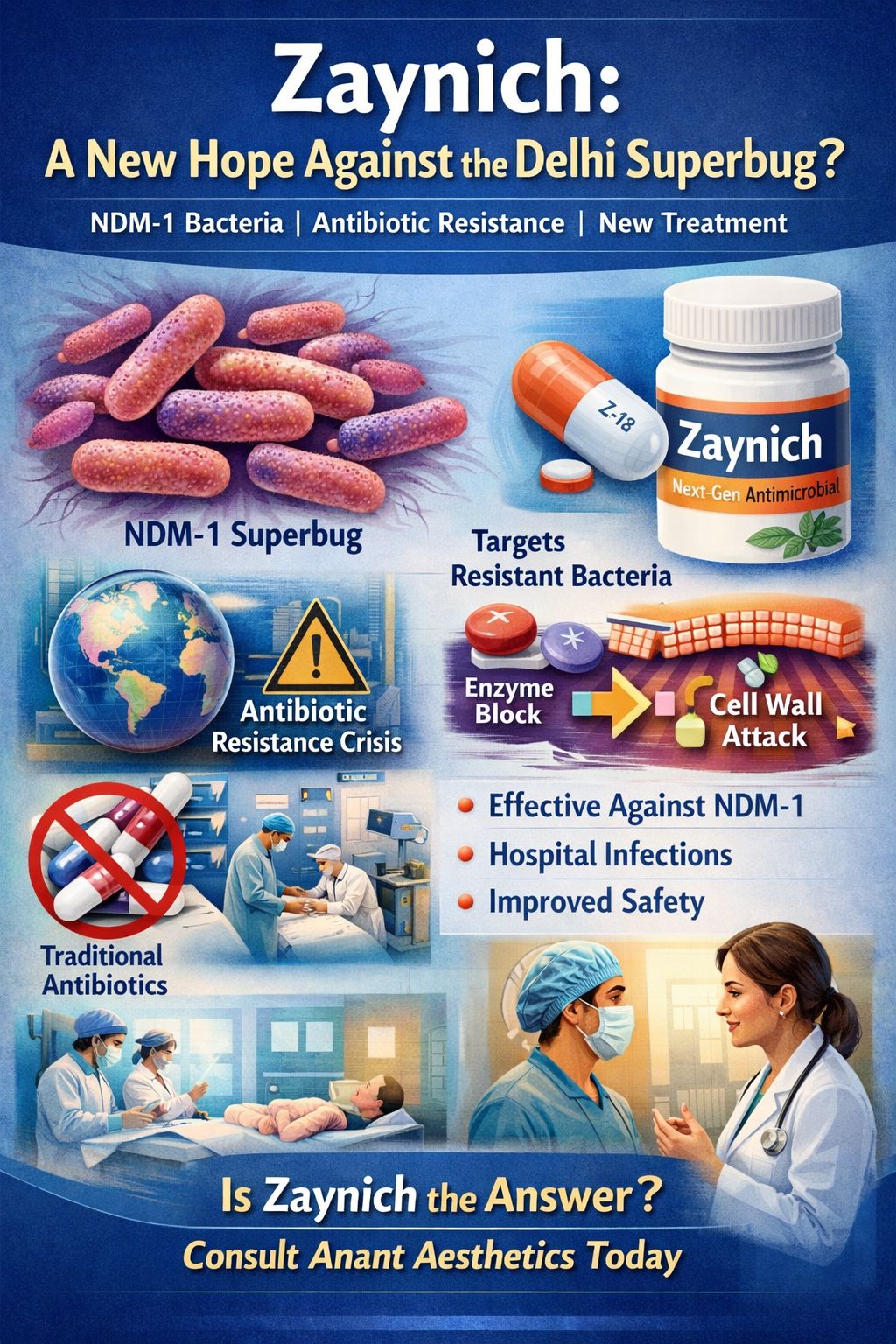
Mechanism of Action: How Zaynich Defeats Resistance
To understand why Zaynich is effective, we must look at how the Delhi superbug works. NDM-1 producing bacteria create enzymes that physically break down the structure of most antibiotics before they can work. Traditional antibiotics are like keys that no longer fit the lock because the bacteria have changed the door.
Zaynich employs a unique “dual-action” mechanism that sets it apart from traditional treatments:
- Enzyme Inhibition: Zidebactam protects Cefepime by binding to and neutralizing the beta-lactamase enzymes (including NDM-1) that would otherwise destroy the antibiotic.
- The Enhancer Effect: Unlike older inhibitors that only protect the antibiotic, Zidebactam has its own antimicrobial activity. It binds to specific proteins (PBP2) in the bacterial cell wall, while Cefepime binds to others (PBP3). This simultaneous attack from two different angles causes the bacterial cell wall to collapse rapidly.
This synergistic approach makes it incredibly difficult for bacteria to develop resistance, as they would need to mutate multiple pathways simultaneously to survive the onslaught.

Spectrum of Activity: A Shield Against Gram-Negative Organisms
Zaynich is specifically engineered to target Gram-negative organisms, which are notoriously difficult to treat because of their double-layered cell membranes. Its spectrum of activity is particularly impressive against:
- NDM-1 producing strains: The primary driver of the “superbug” crisis.
- Carbapenem-Resistant Enterobacteriaceae (CRE): Bacteria that have become resistant to nearly all available antibiotics.
- Pseudomonas aeruginosa: A common cause of hospital-acquired infections that is often highly resistant to treatment.
- Acinetobacter baumannii: Another opportunistic pathogen frequently found in intensive care units.
By covering these high-priority pathogens, Zaynich provides a vital safety net for patients facing severe, otherwise untreatable infections.
Clinical Applications: From Sepsis to Aesthetic Surgery
The primary use of the Zaynich drug is in the management of severe, complicated infections where other treatments have failed. This includes:
- Sepsis and Bloodstream Infections: Where rapid and effective bacterial clearance is a matter of life and death.
- Complicated Urinary Tract Infections (cUTI): Often caused by resistant E. coli.
- Hospital-Acquired Pneumonia: A major risk for patients on ventilators.
Relevance in Plastic Surgery and Aesthetic Practice:
While aesthetic procedures are elective, patient safety is the highest priority. In the rare event of a post-surgical infection, the presence of multi-drug resistant bacteria can lead to poor healing, scarring, or systemic illness. For a high-end clinic like Anant Aesthetics, staying at the forefront of antimicrobial technology ensures that even the most complex cases have a pathway to recovery. Zaynich represents a “last-resort” insurance policy, ensuring that post-surgical infections can be managed effectively, preserving both the patient’s health and the aesthetic outcome.
Advantages Over Conventional Antibiotics
Why is the medical world so excited about Zaynich? Its advantages are multi-fold:
- Overcoming Resistance: It is one of the few drugs specifically designed to neutralize the NDM-1 enzyme.
- Better Tissue Penetration: Zaynich has shown excellent ability to reach high concentrations in various body tissues, including the lungs and skin, which is crucial for treating deep-seated infections.
- Reduced Resistance Development: Because of its dual-target mechanism, bacteria are less likely to develop “escape mutations” during treatment.
- Stability: It remains stable even in the presence of high bacterial loads, where other antibiotics might lose efficacy.
Safety Profile and Side Effects
As with any potent medication, safety is a primary concern. Based on clinical trial data, Zaynich appears to have a safety profile similar to other beta-lactam antibiotics (like penicillin or cephalosporins).
Common Side Effects:
- Nausea or gastrointestinal upset.
- Injection site reactions (as it is administered intravenously).
- Mild skin rashes.
Rare Adverse Effects: In rare cases, patients may experience severe allergic reactions (anaphylaxis) or Clostridioides difficile-associated diarrhea, which is a risk with any broad-spectrum antibiotic.
Contraindications: Zaynich should be avoided in patients with a known severe allergy to cephalosporins or other beta-lactam antibiotics. Dosage adjustments are typically required for patients with impaired kidney function.
Legal and Ethical Considerations in India
The introduction of a drug like Zaynich in India comes with significant responsibility. Currently, its use is largely restricted to clinical trials or through specific “compassionate use” pathways for patients with no other options.
Antimicrobial Stewardship: It is ethically imperative that Zaynich is not overused. If used indiscriminately for minor infections, we risk the bacteria evolving yet again. Antimicrobial stewardship programs are essential to ensure this drug is reserved for the cases that truly need it, preserving its efficacy for future generations.
Future Perspectives: A Global Solution?
The ongoing research into Zaynich is a beacon of hope in the fight against global antimicrobial resistance. As Phase 3 trials conclude, the medical community anticipates its formal entry into hospital formularies worldwide. It represents a shift toward “smarter” antibiotics—drugs that don’t just attack bacteria but actively dismantle their defense systems.
Conclusion: Cautious Optimism
Zaynich offers a powerful new weapon against the Delhi superbug and other highly resistant pathogens. While it is not a “magic bullet” that eliminates the threat of antibiotic resistance entirely, it provides a critical lifeline for patients facing life-threatening infections. As we move forward, the combination of innovative drugs like Zaynich and responsible medical practice will be key to staying one step ahead of the superbugs.
At Anant Aesthetics, we are committed to the highest standards of patient safety and surgical excellence. Understanding the latest developments in medical science, from aesthetic techniques to life-saving antimicrobial therapies, is part of our dedication to your well-being.
Are you considering a procedure and want to learn more about our safety protocols? Contact Anant Aesthetics today for a comprehensive consultation with our expert team.
Frequently Asked Questions (FAQ)
1. Is Zaynich currently available for general use in India?
Zaynich is currently in the advanced stages of clinical trials (Phase 3). While not yet available for routine pharmacy purchase, it may be accessible in certain hospital settings under specific regulatory guidelines or clinical trial protocols.
2. Can Zaynich treat all types of infections?
No. Zaynich is specifically designed for serious infections caused by Gram-negative bacteria, particularly those resistant to other antibiotics. It is not intended for viral infections like the flu or common bacterial infections that respond to standard treatments.
3. Why is the NDM-1 bacteria called the “Delhi superbug”?
The name originated because the gene was first identified in a patient who had been hospitalized in New Delhi. However, the medical community now recognizes it as a global issue, found in many countries across the world.
4. How is Zaynich administered?
Zaynich is administered intravenously (IV), typically in a hospital or clinical setting, to ensure precise dosing and monitoring of the patient’s response to the treatment.