

By Dr Sumit Toor
Understanding Melasma: More Than Just Dark Patches
Melasma is a common skin condition characterized by symmetrical brown or grayish-brown patches, typically appearing on the face. While it is often referred to as the “mask of pregnancy,” it can affect anyone, though it is significantly more common in women. For many in India, particularly those in urban areas aged 25 to 50, melasma can be a source of cosmetic concern and emotional distress.
It is important to understand from the outset that melasma is a chronic and recurrent condition. While it can be managed effectively with the right dermatological care, it requires patience and long-term commitment to maintenance.
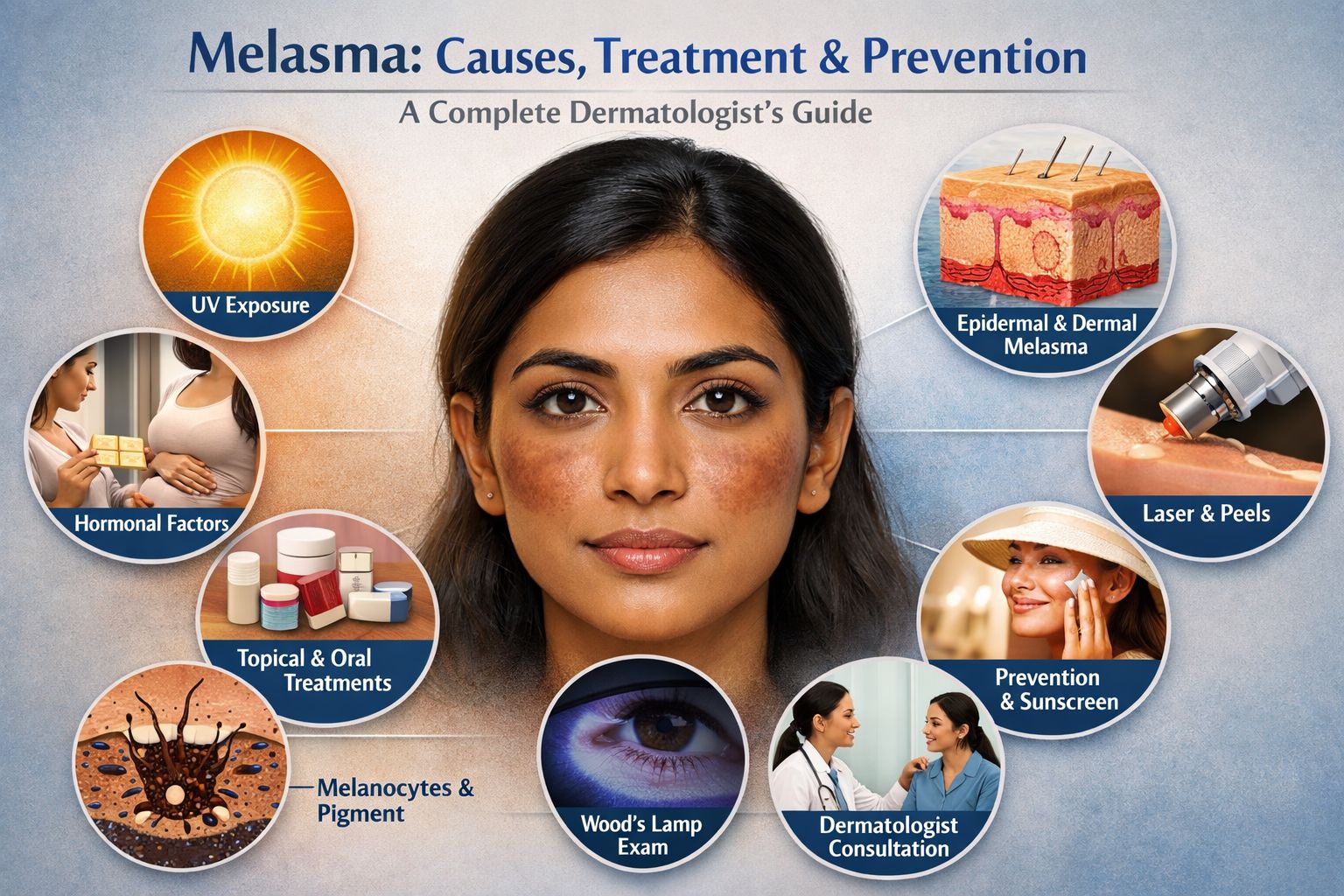
Common Causes and Risk Factors
The exact cause of melasma is complex, but several primary triggers have been identified:
- UV Exposure: Ultraviolet (UV) light from the sun is the most significant trigger. It stimulates melanocytes (pigment-producing cells) to overproduce melanin.
- Hormonal Changes: Fluctuations in estrogen and progesterone—often due to pregnancy, oral contraceptive pills (OCPs), or hormone replacement therapy—frequently trigger melasma.
- Genetic Predisposition: If your close relatives have struggled with melasma, you are more likely to develop it yourself.
- Heat and Visible Light: Recent studies show that heat (from cooking or saunas) and high-energy visible (HEV) light (from screens and LED bulbs) can also worsen pigmentation.
- Cosmetics: Certain fragrances or ingredients in skincare products can cause phototoxic reactions, making the skin more sensitive to light and prone to staining.
How Melasma Develops (Pathophysiology)
To understand pigment treatment, we must look at what happens beneath the surface. Melasma occurs when melanocytes become hyperactive. These cells produce melanin, the pigment that gives skin its color. In melasma, this production goes into overdrive.
Dermatologists categorize melasma based on where the pigment is located:
- Epidermal: Pigment is in the top layer of skin. This type usually responds best to treatment.
- Dermal: Pigment is deeper in the dermis. This is often more challenging to treat and may appear bluish-gray.
- Mixed: A combination of both superficial and deep pigmentation.
Beyond just pigment, inflammation and increased blood vessel activity (vascular factors) also play a role in keeping the patches visible.
Clinical Patterns and Diagnosis
Melasma typically follows specific patterns on the face:
- Centrofacial: Affecting the forehead, cheeks, upper lip, nose, and chin.
- Malar: Focused primarily on the cheeks and nose.
- Mandibular: Appearing along the jawline.
To provide the best treatment for melasma, a dermatologist will perform a clinical diagnosis. This may involve a Wood’s lamp examination, which uses a special UV light to see how deep the pigment sits, or dermoscopy, a non-invasive tool that allows the doctor to examine skin structures at high magnification.
Evidence-Based Treatment Options
Effective melasma treatment in India usually involves a multi-pronged approach tailored to Skin Types IV and V, which are common in the Indian population.
Topical Treatments
- Hydroquinone: A gold-standard skin-lightening agent that inhibits melanin production.
- Triple Combination Creams: A powerful mix of hydroquinone, a retinoid (to increase cell turnover), and a mild corticosteroid (to reduce inflammation).
- Brightening Agents: Ingredients like Azelaic acid, Kojic acid, and Tranexamic acid are often used as safer, long-term alternatives or supplements.
Oral Medications
In certain cases, a dermatologist may prescribe oral Tranexamic acid. This medication helps by blocking the pathways that trigger pigment production, though it requires careful medical supervision and is not suitable for everyone.
In-Clinic Procedures
- Chemical Peels: Using controlled acids like Glycolic, Salicylic, or TCA to exfoliate the top layers of skin and lift pigment.
- Laser Treatments: Advanced lasers like the Q-switched Nd:YAG or low-fluence “laser toning” can break down deep pigment without causing excessive heat that might worsen the condition.
- Microneedling: Often combined with topical Tranexamic acid to ensure the medication reaches deeper layers of the skin.
The Do’s and Don’ts of Managing Melasma
Success in treating dark patches on the face depends heavily on your daily habits.
- DO use broad-spectrum sunscreen: Use an SPF 50+ daily. Tinted sunscreens are particularly effective because they contain iron oxides that protect against visible light.
- DO reapply: Sunscreen should be reapplied every 3 hours, especially if you are outdoors or near a window.
- DON’T use harsh cosmetics: Avoid products that sting or burn, as inflammation can trigger more pigment.
- DON’T ignore heat: Try to stay cool; excessive heat from steam rooms or hot kitchens can flare up your melasma.
Results, Expectations, and Complications
It is vital to have realistic expectations. Improvement is usually gradual, taking weeks or months. Because of the high recurrence rate, combination therapy and strict sun protection are mandatory.
Mistakes to Avoid:
- Steroid Misuse: Using over-the-counter steroid creams can lead to skin thinning and permanent damage.
- Hydroquinone Overuse: Using high-strength hydroquinone for too long without a break can cause exogenous ochronosis, a permanent bluish-black discoloration.
- Aggressive Lasers: If a laser treatment is too aggressive for Indian skin types, it can cause post-inflammatory hyperpigmentation, making the patches darker.
Why Choose Anant Aesthetics for Melasma Treatment?
At Anant Aesthetics, we understand the unique challenges of treating melasma in the Indian climate. We offer:
- Personalized Treatment Plans: No two cases of melasma are the same; we tailor our approach to your skin type and lifestyle.
- Combination Therapies: We utilize the latest in topical, oral, and procedural technology for comprehensive results.
- Safety First: Our focus is on achieving long-term clearance while maintaining the health and integrity of your skin.
Conclusion
While melasma is a persistent condition that is manageable rather than completely “curable,” significant clearance is possible. By working closely with a dermatologist and adhering to a strict sun-protection regimen, you can regain a clear, even complexion. Early intervention is key to preventing the pigment from settling into deeper layers of the skin.