

By Dr Sumit Toor
Introduction
Undergoing a hair transplant is a significant step toward restoring your confidence and achieving a fuller head of hair. Whether you have chosen Follicular Unit Extraction (FUE) or Follicular Unit Transplantation (FUT), the journey to your final results involves a recovery phase. One of the most common experiences during this time is facial swelling, also known as oedema. While seeing your forehead or eyelids puff up can be surprising, it is important to understand that this is a temporary and self-limiting side effect of the procedure.
In most patients, swelling is simply the body’s natural response to the surgical process and the fluids used during the operation. It does not affect the survival of your new hair grafts, nor is it a sign that something has gone wrong. This guide will walk you through why swelling occurs, what to expect day-by-day, and the most effective ways to manage it for a smooth recovery.
Why Does Facial Oedema Occur After Hair Transplant?
According to clinical studies, facial swelling occurs in approximately 40% to 60% of hair transplant patients to varying degrees. There are three primary reasons why this happens:
- Tumescent Fluid Migration: During the surgery, a specialized solution called tumescent fluid (containing saline, local anesthetic, and adrenaline) is injected into the scalp. This fluid creates a cushion between the skin and the skull, making it easier for the surgeon to work. After the procedure, gravity naturally pulls this fluid downward toward the forehead and eyes.
- Inflammatory Response: Any surgical procedure involving micro-incisions triggers the body’s immune system. The resulting inflammation is a sign that your body is sending white blood cells and nutrients to the healing area, which naturally causes localized swelling.
- Lymphatic Drainage Overload: The scalp’s lymphatic system temporarily works overtime to clear the excess fluids and cellular debris, leading to a brief backlog that presents as oedema around the upper face.
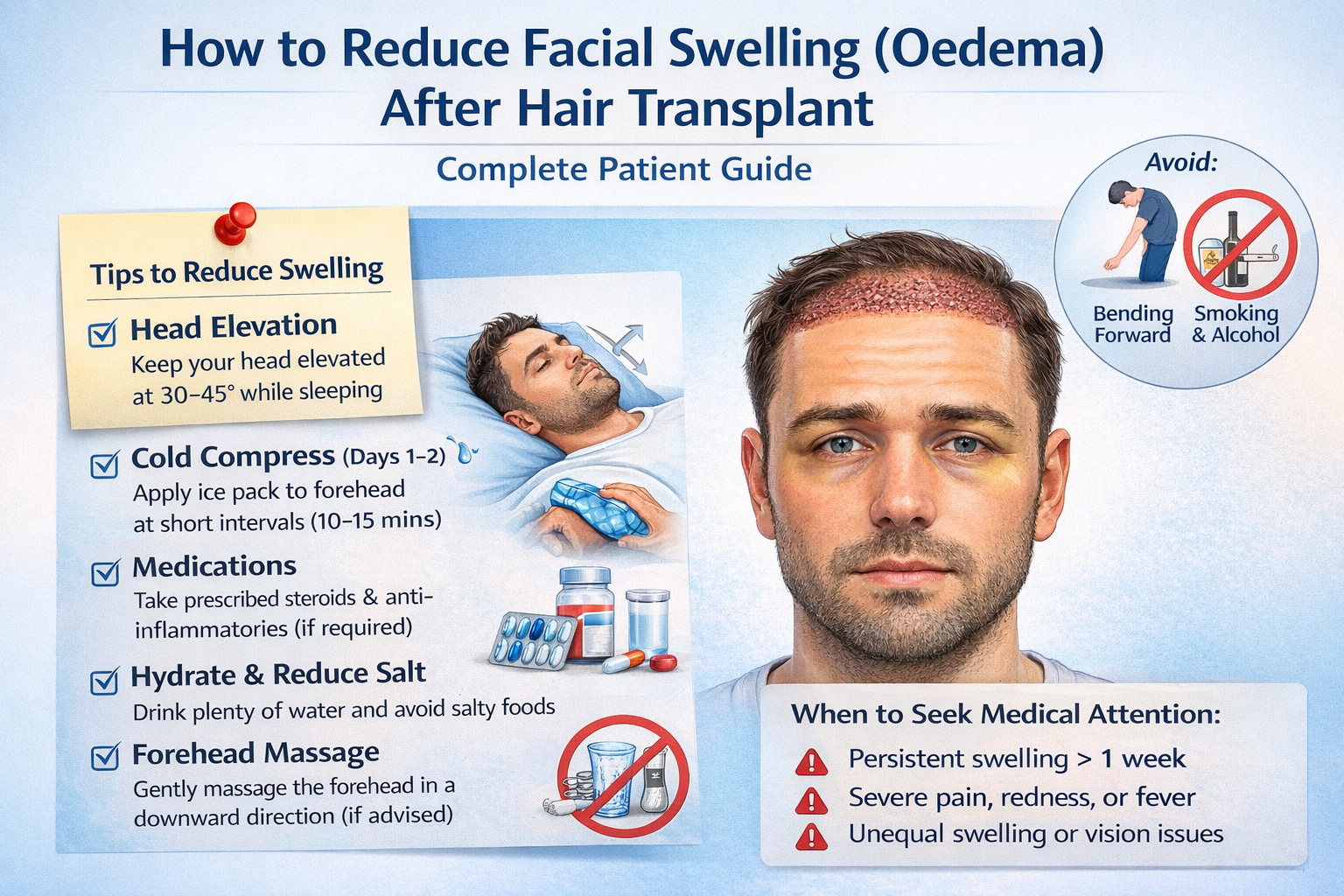
The Swelling Timeline: What to Expect
Understanding the typical progression of post-operative swelling can help alleviate anxiety. In most patients, the timeline follows a predictable pattern:
- Days 1 to 2: Swelling usually begins on the forehead. It may feel slightly tight but is generally painless.
- Days 3 to 4: This is typically when swelling peaks. Gravity may cause the fluid to descend toward the bridge of the nose and the eyelids. In some cases, patients may experience “black eyes” or difficulty opening their eyes fully. While visually alarming, this is entirely normal and harmless.
- Days 5 to 7: The swelling begins to subside rapidly as the body’s lymphatic system successfully drains the excess fluid. By the end of the first week, your face should return to its normal appearance.
Clinically Proven Ways to Reduce Facial Swelling
While oedema is a natural part of the healing process, there are several evidence-based steps you can take to minimize its severity and duration:
1. Keep Your Head Elevated
Gravity is your best tool for preventing fluid from pooling in your face. For the first 5 to 7 nights post-surgery, sleep with your head elevated at a 45-degree angle. Using a recliner chair or stacking two to three pillows under your head and shoulders is highly effective. Avoid bending over to tie your shoes or pick things up during the day.
2. Apply Cold Compresses (With Caution)
Cold therapy constricts blood vessels and reduces inflammation. Apply a cold compress or ice pack wrapped in a clean cloth to your forehead or around your eyes for 10-15 minutes at a time. Crucial Note: Never apply ice directly to the transplanted area (the recipient site), as extreme cold can damage the newly implanted, fragile hair follicles.
3. Stay Hydrated
It may seem counterintuitive, but drinking plenty of water helps flush out the tumescent fluids and excess sodium from your system faster. Aim for at least 2 to 3 liters of water daily during your first week of recovery.
4. Follow Prescribed Medications
Your surgeon will likely prescribe a short course of corticosteroids (such as Dexamethasone or Prednisolone) to proactively manage inflammation. Take these exactly as directed. Over-the-counter anti-inflammatory medications should only be taken if explicitly approved by your clinic, as some can increase the risk of bleeding.
5. Avoid Strenuous Activity
Exercise increases heart rate and blood pressure, which can exacerbate swelling and even cause bleeding at the graft sites. Avoid heavy lifting, intense cardio, and bending over for at least 10 to 14 days post-procedure.
Frequently Asked Questions (FAQs)
Q1: Is facial swelling dangerous to my new hair grafts?
No. Facial swelling is entirely cosmetic and temporary. It does not impact the survival, growth, or final density of your transplanted hair follicles.
Q2: How long does the swelling last?
In most patients, swelling peaks around day 3 or 4 and completely resolves by day 7. If swelling persists beyond a week or is accompanied by severe pain or redness, contact your clinic.
Q3: Can I massage my forehead to push the fluid away?
Gentle massage on the forehead (starting from the center and pushing outward toward the temples) can encourage lymphatic drainage. However, you must be extremely careful not to touch or pull the skin near the transplanted hairline.
Q4: Will everyone experience swelling?
Not necessarily. According to clinical studies, about 40% to 60% of patients experience noticeable swelling. Factors such as the number of grafts, the amount of fluid used, and individual anatomy play a role.
Q5: Can diet affect post-transplant swelling?
Yes. A diet high in sodium (salt) can cause your body to retain water, worsening the oedema. It is advisable to eat a low-sodium, nutrient-rich diet during your first week of recovery.
About the Author
Dr. Sumit Toor
Consultant – Hair Transplant & Aesthetic Surgery
Anant Aesthetics, Adampur
Website: www.anantaesthetics.com