

By Dr Sumit Toor
Introduction
Hair loss is a deeply personal journey that affects millions of men and women worldwide. While traditional solutions like medications and hair transplants have long been the standard, the field of regenerative medicine is opening new doors. Today, exosomes for hair restoration are emerging as one of the most exciting and cutting-edge developments in the quest to regrow hair naturally and effectively.
As a non-surgical alternative, exosome therapy represents the next generation of hair loss treatments. By harnessing the power of cellular communication, this innovative approach aims to wake up dormant hair follicles and promote thicker, healthier hair growth without the need for invasive surgery.
What Are Exosomes?
To understand how this therapy works, it helps to think of exosomes as the “postal service” of the body. Exosomes are tiny, microscopic vesicles (small sacs) released by cells—specifically stem cells. They carry vital information, including proteins, growth factors, and genetic material, from one cell to another.
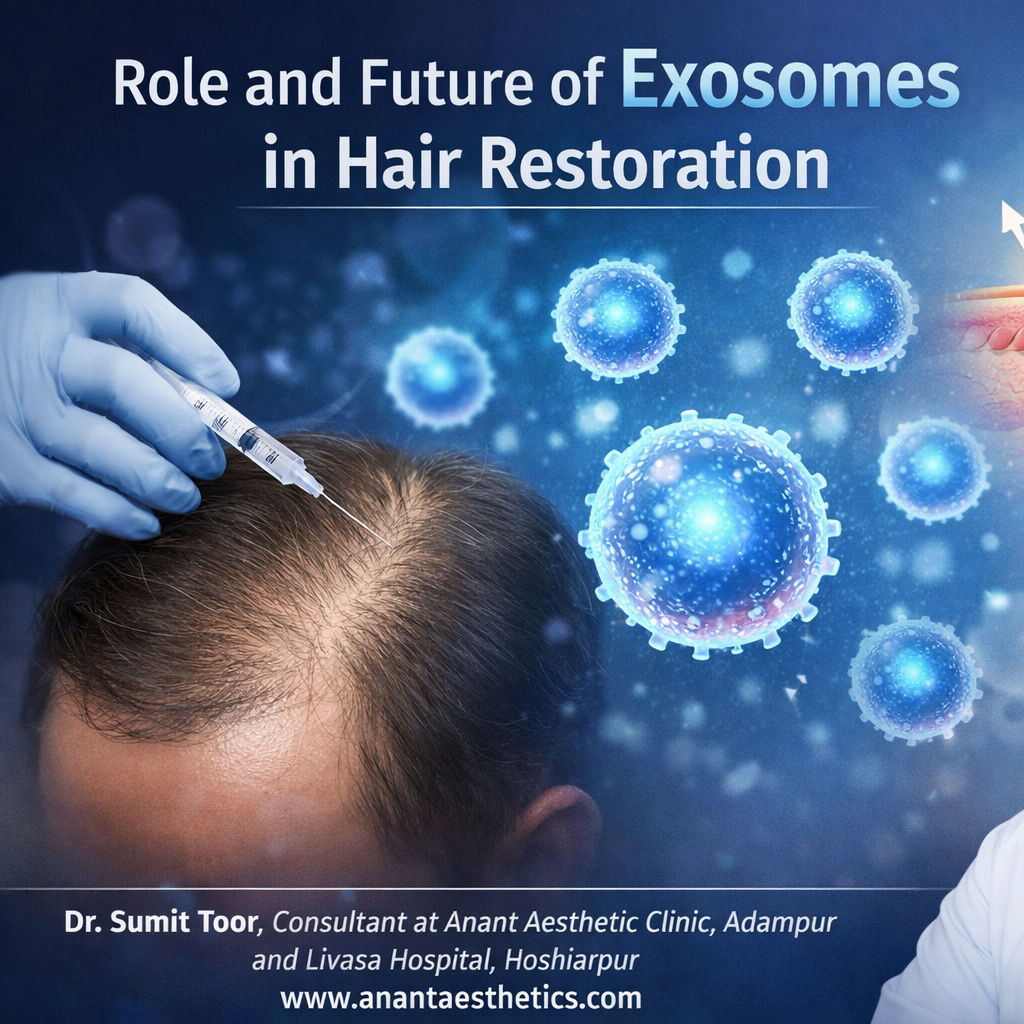
In the context of hair restoration, these messengers tell hair follicle cells to repair themselves and enter the growth phase. It is important to note that exosomes are not cells themselves; they are the signals that cells use to communicate. This makes them highly concentrated and potent compared to other regenerative treatments.
Exosomes vs. PRP (Platelet-Rich Plasma)
Many patients are familiar with PRP therapy, which uses the patient’s own blood to stimulate growth. While both are regenerative, exosomes are often considered more advanced. While PRP relies on the health and age of the patient’s own platelets, exosomes are derived from controlled sources and contain a much higher concentration of growth factors—sometimes up to 100 times more than PRP.
How Exosomes Help in Hair Restoration
The primary goal of using exosomes for hair restoration is to reset the hair growth cycle. Here is how they work within the scalp:
- Cell Signaling: Exosomes send “growth signals” to dormant follicles, encouraging them to return to the active growth (anagen) phase.
- Follicle Stimulation: They help increase the size of the hair follicle, leading to thicker hair strands.
- Anti-inflammatory Effects: Scalp inflammation is a common contributor to hair loss; exosomes help calm this inflammation to create a healthier environment for hair.
- Improved Blood Flow: They promote the formation of new blood vessels, ensuring the scalp receives the nutrients it needs.
Who is a Candidate for Exosome Therapy?
Exosome therapy is versatile and can be used for various types of hair thinning. Ideal candidates include:
- Male and Female Pattern Hair Loss: Those in the early to moderate stages of androgenetic alopecia.
- Early Thinning: Patients noticing a widening part or a receding hairline who want to take proactive steps.
- Adjunct to Hair Transplant: Many patients use exosomes alongside a hair transplant to improve the survival rate of grafted follicles and speed up healing.
The Procedure: What to Expect
The process of receiving exosomes for hair restoration is straightforward and typically takes less than an hour.
- Consultation: Your specialist will examine your scalp and hair loss pattern to ensure you are a good candidate.
- Preparation: The scalp is cleaned, and a local anesthetic or numbing cream may be applied to ensure your comfort.
- Injection: The exosome solution is carefully injected into the thinning areas of the scalp using a very fine needle.
The discomfort level is minimal, often described as a light pinching sensation. Because there is no surgery involved, there is virtually no downtime; most patients return to their normal activities immediately after the appointment.
Results and Expectations
Patience is key when it comes to regenerative medicine. While some patients notice improvements in hair texture quickly, the most significant results typically appear between 3 to 6 months after treatment. This timeline aligns with the natural growth cycle of hair.
While some patients see great results after a single session, a series of treatments may be recommended depending on the severity of the hair loss. During your consultation, a personalized plan will be created to set realistic expectations for your specific hair type and goals.
Advantages of Exosome Therapy
- Non-Surgical: No incisions, no stitches, and no scarring.
- Minimal Downtime: You can go back to work or your daily routine right away.
- Natural Results: The therapy uses the body’s own signaling pathways to regrow your own hair.
- High Potency: Provides a concentrated boost of growth factors directly to the follicles.
Safety and Considerations
As with any emerging medical technology, it is important to stay informed. Currently, the FDA considers exosomes an investigational treatment. This means that while many clinics see excellent results, it is vital to choose a provider who uses high-quality, lab-tested exosome products. Because the quality of exosome products can vary between manufacturers, working with a reputable specialist is the best way to ensure safety and efficacy.
The Future of Hair Regrowth
The future of exosomes for hair restoration is bright. Researchers are currently looking into combination therapies—such as using exosomes with microneedling or laser therapy—to further enhance results. As clinical evidence continues to grow, exosomes are expected to become a cornerstone of non-surgical hair restoration, potentially offering breakthroughs for those who haven’t responded to traditional treatments.
Frequently Asked Questions
Is exosome therapy safe?
When performed by a qualified professional using reputable products, exosome therapy is generally considered safe with minimal risk of adverse reactions.
How is it different from PRP?
PRP uses your own blood, whereas exosomes are a concentrated “messenger” product derived from stem cells. Exosomes typically contain a much higher concentration of growth factors and do not require a blood draw.
How long do results last?
Results can last for a year or more, but because hair loss is often a progressive condition, maintenance sessions may be needed to sustain the growth.
Who is the ideal candidate?
Men and women in the early to middle stages of hair thinning are usually the best candidates. It is less effective for areas that are completely bald.
Are multiple sessions required?
Many patients benefit from a single session, but a series of 2–3 treatments spaced several months apart may be recommended for optimal results.
Conclusion
Exosome therapy represents a major leap forward in regenerative aesthetics. By focusing on cellular health and communication, it offers a promising, non-invasive path for those looking to reclaim their hair and their confidence. If you are ready to explore the future of hair regrowth, the best first step is a consultation with a qualified specialist to see if this advanced treatment is right for you.
Dr. Sumit Toor
www.anantaesthetics.com