

By Dr Sumit Toor
Introduction
In recent years, the landscape of weight management has undergone a seismic shift. What was once a journey defined solely by rigorous dieting and hours in the gym has been transformed by the emergence of highly effective injectable medications. Among these, Ozempic has become a household name, fueled by viral social media trends and celebrity endorsements. However, as the buzz around Ozempic weight loss India grows, so do the questions regarding its safety, its physiological impact, and its legal standing within the Indian healthcare system.
While the promise of significant weight loss is alluring, it has also brought new aesthetic concerns to the forefront, most notably the term “Ozempic face.” This refers to the gaunt, aged appearance that can result from rapid facial fat loss. As more patients seek non-surgical weight loss options to avoid the risks and recovery time associated with bariatric surgery, understanding the nuances of GLP-1 medications is essential. This article provides a comprehensive look at semaglutide, helping Indian patients make informed, evidence-based decisions under medical supervision.
What is Ozempic?
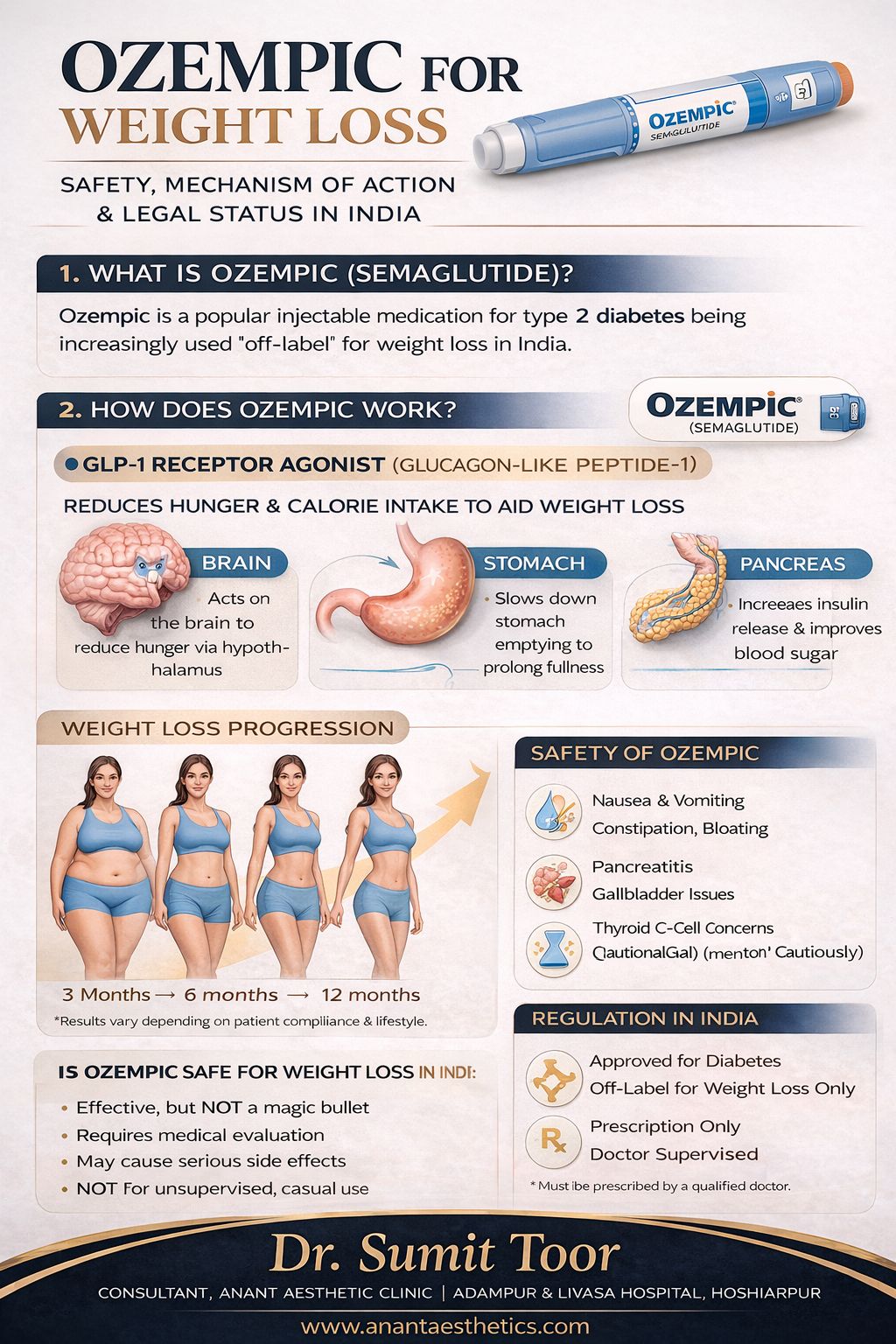
Ozempic is the brand name for semaglutide, a medication developed by Novo Nordisk. It belongs to a class of drugs known as glucagon-like peptide-1 (GLP-1) receptor agonists. Originally, Ozempic was researched and approved specifically for the treatment of Type 2 diabetes. Its primary goal was to help patients manage blood sugar levels by enhancing the body’s natural insulin response.
During clinical trials for diabetes, researchers noticed a consistent and significant “side effect”: patients were losing a substantial amount of weight. This led to the development of Wegovy, a higher-dose version of semaglutide specifically FDA-approved for chronic weight management. In many regions, including India, Ozempic is frequently used “off-label” for weight loss, meaning doctors prescribe it for a purpose other than its original regulatory approval for diabetes.
Mechanism of Action: How It Works in the Body
To understand why semaglutide is so effective, we must look at the physiology of hunger. Semaglutide mimics a naturally occurring hormone in the body called GLP-1, which is released in the gut after we eat. It works through several key pathways:
- Appetite Suppression via the Hypothalamus: The medication crosses the blood-brain barrier and targets the hypothalamus, the brain’s hunger center. It signals a feeling of satiety (fullness) and reduces cravings, making it much easier for patients to adhere to a calorie-restricted diet.
- Delayed Gastric Emptying: Semaglutide slows down the rate at which food leaves the stomach. This prolonged digestion keeps patients feeling full for longer periods after a meal.
- Improved Insulin Sensitivity: By stimulating the pancreas to release insulin when blood sugar is high and reducing the liver’s production of glucagon, it stabilizes blood glucose levels, preventing the “crash” that often leads to binge eating.
Ultimately, these factors create a sustainable calorie deficit. Unlike “willpower” alone, GLP-1 weight loss drugs India address the biological drivers of obesity, treating it as a chronic metabolic condition rather than a lifestyle flaw.
Effects on the Body: Weight Loss and Aesthetics
The weight loss pattern observed with semaglutide is typically steady and significant. However, it is important to distinguish between fat loss and muscle loss. Rapid weight loss can sometimes lead to a reduction in lean muscle mass if not accompanied by adequate protein intake and resistance training. This is why medical monitoring is vital to ensure the weight being lost is primarily adipose tissue (fat).
One of the most discussed effects is the impact on the face. Facial fat provides volume and a youthful structure. When a patient loses weight rapidly, the face is often one of the first places to show it. The loss of subcutaneous fat can lead to skin sagging, deeper wrinkles, and a hollowed-out appearance—the aforementioned “Ozempic face.” While the body looks slimmer, the face may appear prematurely aged, leading many patients to seek aesthetic interventions to restore their youthful contours.
Safety Profile: Understanding the Risks
When asking, “is semaglutide safe?”, it is important to weigh the benefits against the potential side effects. Most patients experience mild to moderate gastrointestinal issues, especially during the first few weeks as the dosage is titrated upward.
Common side effects include:
- Nausea and vomiting
- Diarrhea or constipation
- Abdominal bloating and gas
- Heartburn or acid reflux
Serious but rare risks:
- Pancreatitis: Inflammation of the pancreas is a serious condition that requires immediate medical attention.
- Gallbladder Issues: Rapid weight loss can increase the risk of gallstones and cholecystitis.
- Thyroid C-cell Concerns: In rodent studies, semaglutide was linked to thyroid tumors. While this has not been definitively proven in humans, the medication carries a warning for individuals with a personal or family history of Medullary Thyroid Carcinoma (MTC) or Multiple Endocrine Neoplasia syndrome type 2 (MEN 2).
Because of these risks, Ozempic side effects India must be managed by a qualified physician who can monitor blood markers and adjust dosages safely.
Is Ozempic Safe for Weight Loss?
Evidence-based clinical trials, such as the STEP (Semaglutide Treatment Effect in People with obesity) program, have shown that semaglutide is highly effective, with participants losing an average of 15% of body weight. When compared to lifestyle-only interventions (diet and exercise), the results are significantly superior for those with a high BMI or weight-related comorbidities.
However, safety is dependent on proper patient selection. It is not a “quick fix” for someone looking to lose five kilograms for a wedding. It is a serious medical intervention intended for those with clinical obesity (BMI over 30) or those with a BMI over 27 who also have conditions like hypertension or high cholesterol.
Legal Status in India
The legal landscape for Ozempic weight loss India is specific. As of now, the injectable form of semaglutide (Ozempic) is primarily approved by the Central Drugs Standard Control Organisation (CDSCO) for the treatment of Type 2 diabetes. However, an oral version of semaglutide, marketed as Rybelsus, is widely available and approved in India for diabetes management.
While doctors may prescribe these medications “off-label” for weight loss based on their clinical judgment, patients must be wary of sourcing these drugs through unauthorized channels. There is a rising market for counterfeit or “compounded” semaglutide, which may not contain the actual active ingredient or may be contaminated. In India, semaglutide is a prescription-only medication. Ethical practice dictates that it should only be administered after a thorough physical examination and blood work.
Who Should NOT Take Ozempic?
Certain contraindications make semaglutide unsafe for specific individuals. You should avoid this medication if you have:
- A personal or family history of Medullary Thyroid Carcinoma (MTC).
- Multiple Endocrine Neoplasia syndrome type 2 (MEN 2).
- A history of severe pancreatitis.
- Known allergies to semaglutide or any of its components.
- Pregnancy or Breastfeeding: Semaglutide is not recommended for women who are pregnant or planning to become pregnant, as its effects on fetal development are not fully understood. It is generally advised to stop the medication two months before a planned pregnancy.
The Role of Aesthetic Clinics
Weight loss is a holistic journey that doesn’t end when the scale hits a certain number. Aesthetic clinics play a vital role in managing the physical changes that follow significant weight reduction. To combat the “gaunt” look or skin laxity, a combined approach is often the most effective:
- Dermal Fillers: Hyaluronic acid fillers can restore lost volume to the cheeks, temples, and jawline, softening the sharp angles caused by fat loss.
- PRF (Platelet-Rich Fibrin): This advanced treatment uses the patient’s own blood to stimulate collagen production and improve skin texture and thickness naturally.
- Skin Tightening: Technologies like Radiofrequency (RF) or Ultrasound-based lifting can help tighten skin that has lost its elasticity due to rapid stretching and shrinking.
By integrating medical weight loss with aesthetic care, patients can achieve a transformation that looks as healthy as it feels.
Conclusion
Semaglutide represents a breakthrough in metabolic medicine, offering hope to millions struggling with obesity. However, it is not a magic wand. It is a powerful tool that requires a balanced view: it is highly effective but not risk-free. Success with GLP-1 weight loss drugs India requires a commitment to lifestyle changes, regular medical check-ups, and a focus on long-term health rather than just short-term aesthetics.
If you are considering medical weight loss, always consult with a qualified healthcare professional to ensure the treatment is appropriate for your unique medical history. A holistic approach—combining metabolic science with aesthetic maintenance—is the gold standard for achieving a confident, healthy new you.
Dr. Sumit Toor, Consultant at Anant Aesthetic Clinic, Adampur and Livasa Hospital, Hoshiarpur
Website: www.anantaesthetics.com