

By Dr Sumit Toor
Introduction to Regenerative Aesthetics
In recent years, the field of aesthetic medicine in India has undergone a significant paradigm shift. While traditional treatments often focused on temporarily masking the signs of aging—such as filling a wrinkle or freezing a muscle—the modern patient is increasingly seeking solutions that work from within. This has led to the rise of regenerative aesthetics, a branch of dermatology focused on repairing, replacing, and regenerating human cells and tissues to restore a youthful, healthy appearance naturally.
Among the most exciting breakthroughs in this field is the emergence of PDRN (Polydeoxyribonucleotide). Often referred to as a next-generation polynucleotide skin booster, PDRN is not just another filler; it is a biological primer that encourages the skin to heal itself. As demand grows for treatments that offer a “natural look” without the downtime of surgery, PDRN has become a cornerstone for those seeking long-term skin health and vitality.
What is PDRN? The Molecule Explained
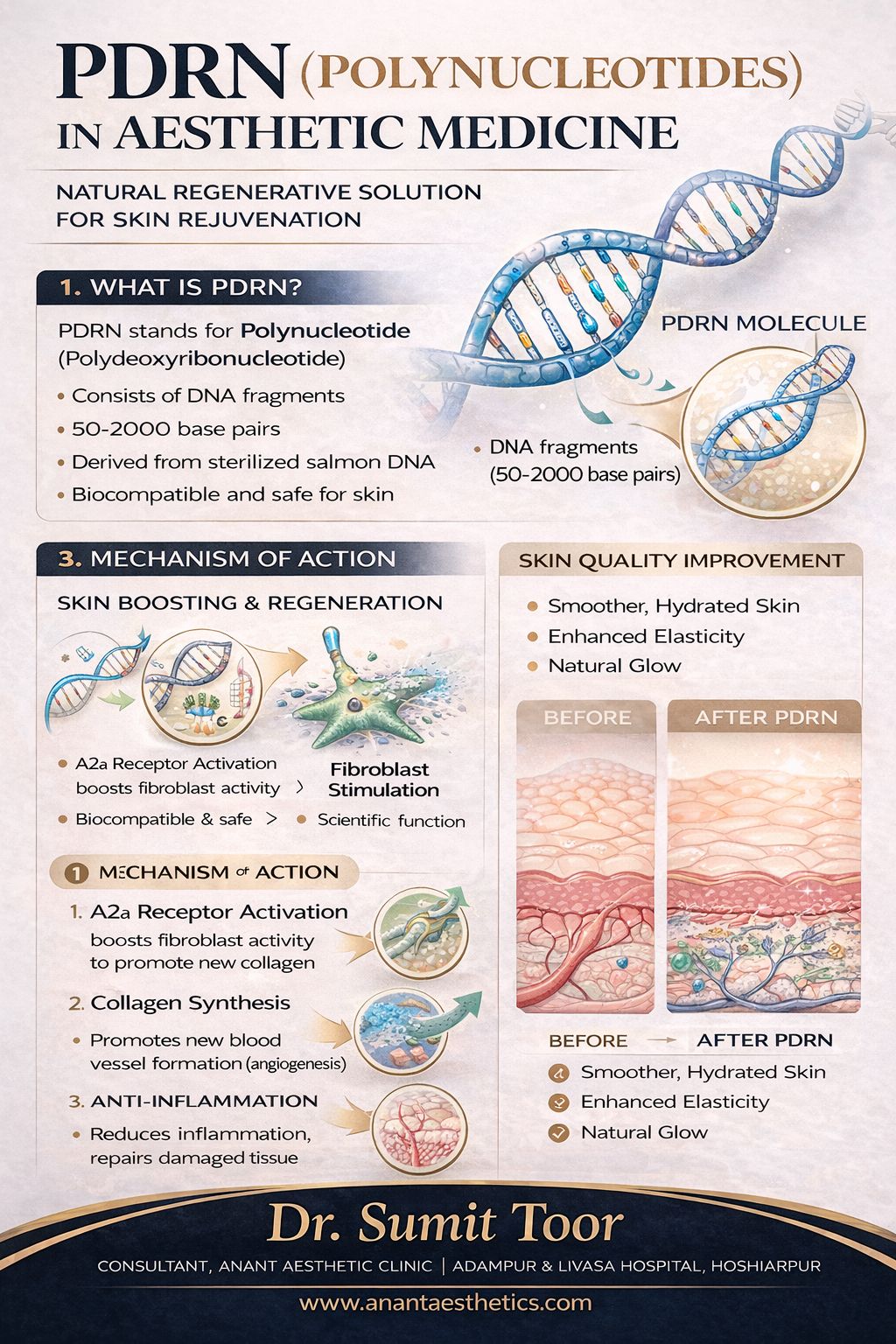
PDRN stands for Polydeoxyribonucleotide. To understand it simply, think of it as a collection of DNA fragments. These fragments are essential building blocks that our bodies use to repair damaged tissue. In the world of aesthetic medicine, PDRN is classified as a polynucleotide—a chain of nucleotides that acts as a regenerative template.
The Source: Most high-quality PDRN used in clinical practice is derived from the DNA of salmon (specifically Oncorhynchus mykiss). Salmon DNA is used because it bears a striking resemblance to human DNA, making it highly biocompatible. This means the human body recognizes the molecule and can utilize it effectively without triggering an adverse immune response.
Molecular Structure: PDRN consists of DNA fragments ranging from 50 to 2000 base pairs. These fragments are purified and sterilized to ensure they are free of proteins and peptides that could cause allergies. This high level of purification contributes to its excellent safety profile, making it suitable for various skin types, including sensitive Indian skin.
Physiology and Mechanism of Action
How exactly does a DNA fragment from a salmon transform your skin? The process is fascinating and deeply rooted in cellular biology. Unlike traditional skin boosters that simply hydrate the surface, PDRN works at a deep cellular level through several key mechanisms:
- Activation of A2A Adenosine Receptors: This is the “master switch.” When PDRN is injected, it binds to these specific receptors on the cell surface. This binding triggers a cascade of healing events, reducing inflammation and promoting rapid tissue repair.
- Stimulation of Fibroblasts: Fibroblasts are the cells responsible for producing collagen and elastin. PDRN acts as a fuel for these cells, significantly increasing their activity and proliferation. This leads to a natural increase in collagen synthesis, which firms the skin and reduces sagging.
- Angiogenesis: PDRN promotes the formation of new micro-blood vessels (angiogenesis). Improved blood flow means better oxygenation and nutrient delivery to the skin cells, resulting in a healthier, more radiant complexion.
- Anti-Inflammatory Effects: By neutralizing free radicals and reducing inflammatory cytokines, PDRN helps calm the skin, making it an excellent choice for patients with inflammatory conditions or those recovering from aggressive laser treatments.
- Extracellular Matrix (ECM) Improvement: It helps reorganize the skin’s internal structure, ensuring that the “scaffolding” of your skin is strong and resilient.
Differentiating PDRN from Other Treatments: It is important to distinguish PDRN from other popular injectables. While Hyaluronic Acid (HA) fillers provide immediate volume by holding water, they do not necessarily repair the skin. PRP (Platelet-Rich Plasma) uses your own blood to release growth factors, but its efficacy can vary based on the patient’s health. PDRN, on the other hand, provides a standardized, potent dose of regenerative material that works independently of the patient’s current systemic health.
Indications in Aesthetic Practice
The versatility of PDRN treatment in India has made it a favorite for addressing a wide range of concerns. Common indications include:
- Skin Rejuvenation: Improving the overall quality, tone, and texture of the face, neck, and hands.
- Under-Eye Dark Circles & Fine Lines: Under eye PDRN treatment is highly effective for thinning skin in the periorbital area, helping to thicken the dermis and reduce the appearance of hollows and shadows.
- Acne Scars: By promoting tissue regeneration, PDRN helps fill in atrophic acne scars and smooths out the skin surface.
- Photoaging: Reversing the damage caused by chronic sun exposure, which is a common concern in the Indian climate.
- Post-Laser Healing: Accelerating recovery after fractional CO2 lasers or chemical peels.
- Hair Restoration: When injected into the scalp, PDRN can help revitalize dormant hair follicles and improve hair density as an adjunct to other treatments.
Treatment Protocol: What to Expect
A typical PDRN session is relatively quick and involves minimal discomfort. The procedure usually follows these steps:
1. Consultation & Numbing: After a thorough skin analysis, a topical numbing cream is applied to the treatment area for 30–45 minutes to ensure a painless experience.
2. Injection Technique: The practitioner uses a mesotherapy or micro-injection technique, delivering tiny droplets of the PDRN solution into the dermis. In some cases, a cannula may be used for specific areas like the under-eyes.
3. Session Frequency: For optimal results, a series of 3 to 4 sessions is typically recommended. These are spaced about 3 to 4 weeks apart.
4. Maintenance: Once the initial cycle is complete, maintenance sessions every 6 to 9 months can help sustain the regenerative benefits and keep the skin looking youthful.
Results and Benefits: The “Glass Skin” Effect
One of the primary PDRN injection benefits is the gradual, natural-looking improvement it provides. Unlike fillers, which offer an instant change, PDRN results unfold over several weeks as your body produces new collagen.
- Improved Texture and Hydration: Skin feels smoother and more supple to the touch.
- Increased Elasticity: The skin “bounces back” more easily, reducing the appearance of fine lines.
- Natural Glow: Many patients report a “glass skin” effect—a luminous, dewy complexion that looks healthy even without makeup.
- Long-lasting Repair: Because the treatment repairs the skin at a cellular level, the benefits are more durable than simple topical treatments.
Comparison with Other Treatments
Choosing the right treatment can be confusing. Here is how PDRN stacks up against other popular options:
- PDRN vs. PRP: PRP relies on the quality of your own platelets. PDRN is a lab-purified, consistent concentration of polynucleotides, often yielding more predictable results for skin quality.
- PDRN vs. HA Skin Boosters: HA boosters primarily provide deep hydration. PDRN provides hydration plus active cellular repair and collagen stimulation.
- PDRN vs. Exosomes: Exosomes are signaling vesicles that carry messages between cells. While both are regenerative, PDRN provides the actual raw materials (nucleotides) for repair, and they are often used together in combination therapies for a synergistic effect.
Complications and Safety Profile
PDRN is widely regarded as one of the safest injectables available today. Because it is highly purified and biocompatible, the risk of a serious adverse reaction is extremely low.
Common Side Effects: These are typically mild and resolve within 24–48 hours. They include mild redness at the injection site, slight swelling (edema), and occasionally small bruises or tenderness.
Rare Risks: Allergic reactions are very uncommon due to the removal of salmon proteins during the manufacturing process. However, as with any injection, there is a minimal risk of infection if post-care instructions are not followed.
Who is an Ideal Candidate?
PDRN is suitable for almost anyone looking to improve their skin health, but it is particularly beneficial for:
- Early Aging Patients: Those in their late 20s to 40s looking to prevent the onset of deep wrinkles and maintain skin density.
- Natural Beauty Seekers: Patients who are hesitant about traditional fillers and prefer a treatment that enhances their own biological processes.
- Recovery Patients: Individuals with sensitive skin or those looking to speed up healing after other aesthetic procedures.
Cost of PDRN Treatment in India
The cost of PDRN treatment in India varies based on the clinic’s location, the expertise of the dermatologist, and the specific brand of polynucleotide used. On average, a single session can range from ₹15,000 to ₹30,000. Most clinics offer package pricing for a series of three sessions, which can range from ₹40,000 to ₹75,000. While it is a premium treatment, the long-term benefits for skin health often make it a cost-effective alternative to multiple less-effective procedures.
Conclusion
PDRN represents the future of skincare—a move away from temporary fixes toward true biological rejuvenation. By harnessing the power of polynucleotides, patients can achieve firmer, brighter, and healthier skin through a safe and natural process. Whether used as a standalone treatment for under-eye circles or as part of a comprehensive anti-aging plan, PDRN offers a sophisticated solution for the modern Indian patient.
Note: Results may vary from person to person based on individual skin conditions and lifestyle factors. Always consult with a qualified professional to determine the best treatment plan for your needs.
Dr. Sumit Toor, Consultant at Anant Aesthetic Clinic, Adampur.
Website: www.anantaesthetics.com