

By Dr. Sumit Toor
Understanding Gynecomastia: More Than Just a Cosmetic Concern
For many men and teenage boys, the development of enlarged breast tissue can be a source of significant physical discomfort and emotional distress. Known medically as gynecomastia, this condition is far more common than most people realize, affecting up to 50-60% of adolescents and a large percentage of adult men at some point in their lives.
While often a source of embarrassment, it is important to understand that gynecomastia is a medical condition, not a reflection of one’s masculinity or fitness levels. This guide aims to provide a clear, reassuring, and comprehensive look at why this happens and how modern medicine can help you regain your confidence.
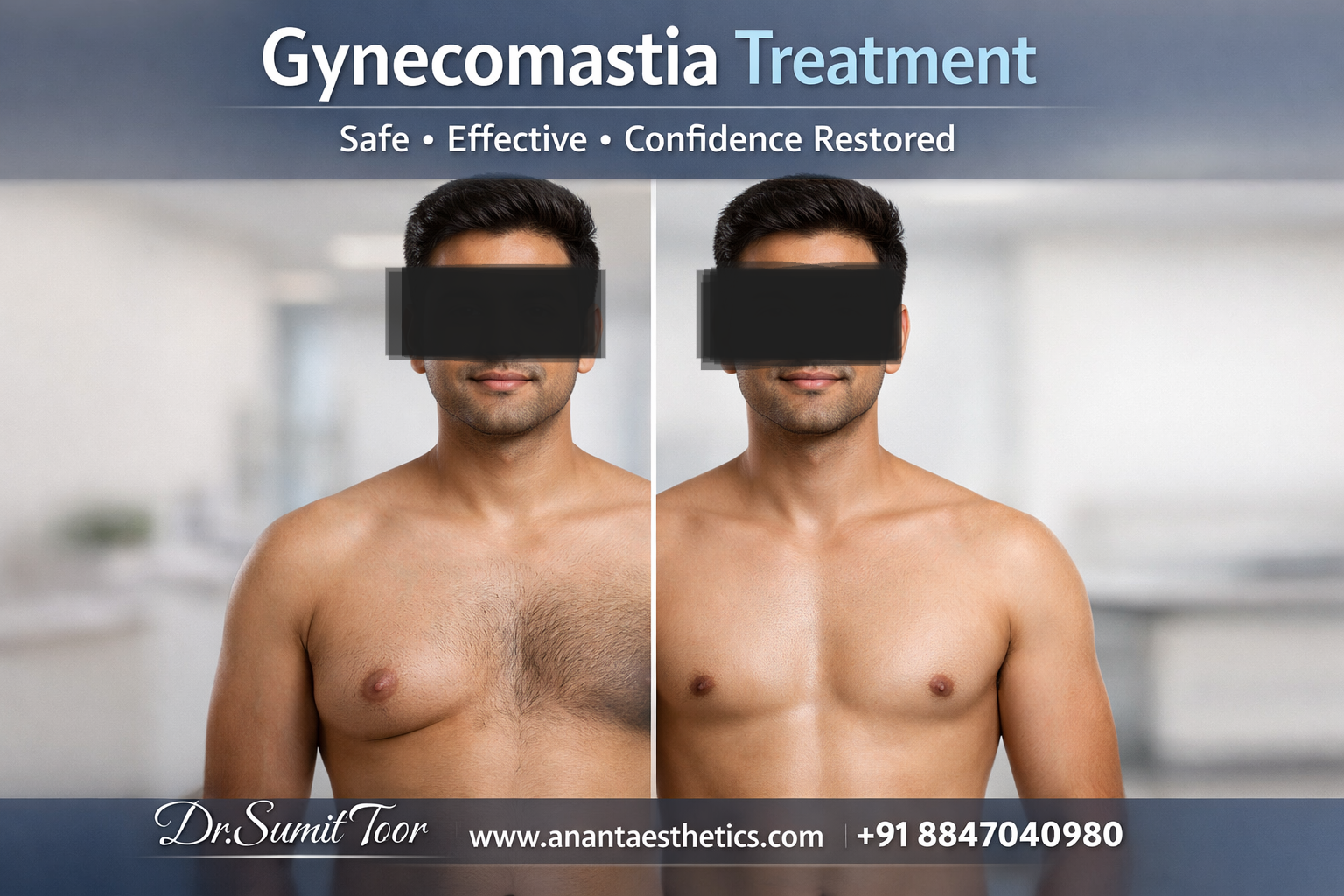
What is Gynecomastia?
Gynecomastia is the non-cancerous enlargement of the glandular tissue of the male breast. It can affect one or both breasts, sometimes unevenly. It is crucial to distinguish between “true” gynecomastia and “pseudo-gynecomastia.”
- True Gynecomastia: This involves the growth of actual breast gland tissue. It usually feels like a firm or rubbery mass behind the nipple area.
- Pseudo-gynecomastia: This is simply an accumulation of fat in the chest area, often seen in men who are overweight. It does not involve the growth of glandular tissue.
In many cases, patients present with a combination of both glandular tissue and excess fat, requiring a tailored approach to treatment.
Common Causes of Male Breast Enlargement
The primary driver of gynecomastia is an imbalance between two hormones: testosterone (which controls male traits) and estrogen (which controls female traits, including breast growth). While all men produce some estrogen, an increase in estrogen or a decrease in testosterone can trigger breast tissue growth.
1. Natural Hormonal Shifts
During puberty, hormone levels fluctuate wildly. Many boys develop some degree of breast enlargement during this time. In most cases, this resolves on its own within six months to two years without any medical intervention.
2. Medications and Substances
A variety of substances can trigger gynecomastia, including:
- Anabolic steroids used for bodybuilding.
- Certain anti-anxiety medications and antidepressants.
- Some blood pressure and heart medications.
- Excessive alcohol consumption or use of recreational drugs like marijuana.
3. Health Conditions and Obesity
Obesity is a major factor because fat tissue can actually convert male hormones into estrogen. Additionally, certain systemic diseases affecting the liver, kidneys, or thyroid can disrupt the body’s hormonal equilibrium.
How to Identify Gynecomastia: Symptoms and Signs
Identifying gynecomastia usually begins with a physical observation. Common signs include:
- Swelling in the breast gland tissue.
- Tenderness or sensitivity in the chest area.
- A firm or rubbery lump felt directly beneath the nipple.
- Asymmetry, where one side appears larger than the other.
Beyond the physical symptoms, the psychological impact is often the most significant. Many men report avoiding the gym, swimming pools, or wearing tight-fitting clothes due to a loss of self-confidence and body image issues.
When Should You See a Doctor?
While gynecomastia is rarely a sign of a serious underlying problem, you should seek a consultation if you notice “red flag” signs such as:
- Rapid or sudden growth of the chest tissue.
- Significant pain or extreme tenderness.
- Nipple discharge.
- A very hard or fixed lump that feels different from the surrounding tissue.
Diagnosis: What to Expect
When you visit a specialist, such as Dr. Sumit Toor, the diagnostic process is straightforward and professional. It typically involves:
- Clinical Examination: A physical assessment to determine the ratio of fat to glandular tissue.
- Medical History: A discussion about any medications, supplements, or health conditions.
- Diagnostic Tests: In some cases, blood tests are ordered to check hormone levels. An ultrasound may be used to rule out other conditions and confirm the presence of glandular tissue.
Treatment Options: From Lifestyle to Surgery
The right treatment depends on the cause, the duration of the condition, and the level of discomfort.
Lifestyle Changes
If the enlargement is purely fat (pseudo-gynecomastia), weight loss through diet and exercise can significantly improve the appearance of the chest. However, exercise alone cannot “burn away” firm glandular tissue.
Medical Management
In very early stages or when caused by a specific hormonal deficiency, medication may be used. However, once the glandular tissue has been present for more than a year, it often becomes fibrous and does not respond well to pills.
Surgical Treatment (The Definitive Solution)
For most men seeking a permanent and contoured result, male breast reduction surgery is the gold standard. This typically involves:
- Liposuction: Used to remove excess fatty tissue and contour the chest wall.
- Gland Excision: A small incision is made (usually around the edge of the nipple) to physically remove the firm glandular tissue.
- Combination Technique: Most modern surgeries use both liposuction and excision to ensure a smooth, flat, and masculine chest contour.
The Procedure Explained
The surgery is a routine procedure performed with the goal of minimal scarring and maximum aesthetic improvement.
- Anesthesia: Usually performed under general anesthesia or deep sedation for patient comfort.
- Duration: The procedure typically takes 1 to 2 hours.
- Facility: It is often a daycare procedure, meaning you can return home the same day.
Recovery and Aftercare
Recovery is generally faster than most patients expect. Following these steps ensures the best results:
- Compression Garment: You will need to wear a specialized pressure vest for 4–6 weeks. This helps reduce swelling and helps the skin adhere to the new chest contours.
- Downtime: Most patients return to desk work within 3–5 days.
- Physical Activity: Light walking is encouraged immediately, but heavy lifting and gym workouts should be avoided for about 4 weeks.
- Scar Care: Incisions are placed discreetly. Over time, these fade significantly and become barely noticeable.
Results and Expectations
While you will see an immediate change in the shape of your chest, final results are usually visible after 3 to 6 months once all swelling has subsided. The results are generally permanent, provided you maintain a stable weight and avoid substances that cause hormonal imbalances.
Risks and Complications
As with any surgery, there are minor risks, though they are rare when performed by an expert plastic surgeon. These include temporary bruising, swelling, or minor contour irregularities. Infection is extremely rare due to modern sterile techniques and post-operative antibiotics.
Gynecomastia Surgery Cost in India
The cost of gynecomastia treatment in India varies based on several factors:
- The grade of gynecomastia (Grade 1 to Grade 4).
- The surgical technique required (Liposuction vs. Gland Excision).
- The hospital facility and the expertise of the surgeon.
Investing in an experienced surgeon ensures safety and a superior aesthetic outcome.
Frequently Asked Questions (FAQs)
Will the tissue come back?
If the gland is completely removed and you maintain a healthy lifestyle, it is very unlikely to return.
Is the surgery painful?
Most patients describe the post-operative feeling as “soreness” similar to a heavy chest workout, rather than sharp pain. This is easily managed with prescribed medication.
Will there be visible scars?
Plastic surgeons use very small incisions hidden in the natural shadows of the nipple or armpit to ensure scars are as inconspicuous as possible.
Can exercise alone cure it?
Exercise can reduce fat, but it cannot remove glandular tissue. If you have true gynecomastia, surgery is the only way to remove the gland.
Take the First Step Toward Confidence
You don’t have to live with the discomfort and self-consciousness of gynecomastia. Modern surgical techniques offer a safe, effective, and permanent way to achieve a flatter, more masculine chest. Consulting with a qualified professional is the best way to understand your options and create a plan tailored to your body.
For expert consultation and personalized care, visit Anant Aesthetic Clinic.
Dr. Sumit Toor, Expert Plastic Surgeon
Contact: +91 8847040980