

By Dr. Sumit Toor
Unwanted body hair has long been a common cosmetic concern, traditionally managed through repetitive methods like shaving, waxing, threading, and depilatory creams. While these techniques offer immediate results, they are temporary and often come with frustrating side effects, including ingrown hairs, skin pigmentation, and chronic irritation. Laser hair reduction has revolutionized the field of aesthetic medicine by providing a scientifically proven, long-term solution that prioritizes both safety and precision.
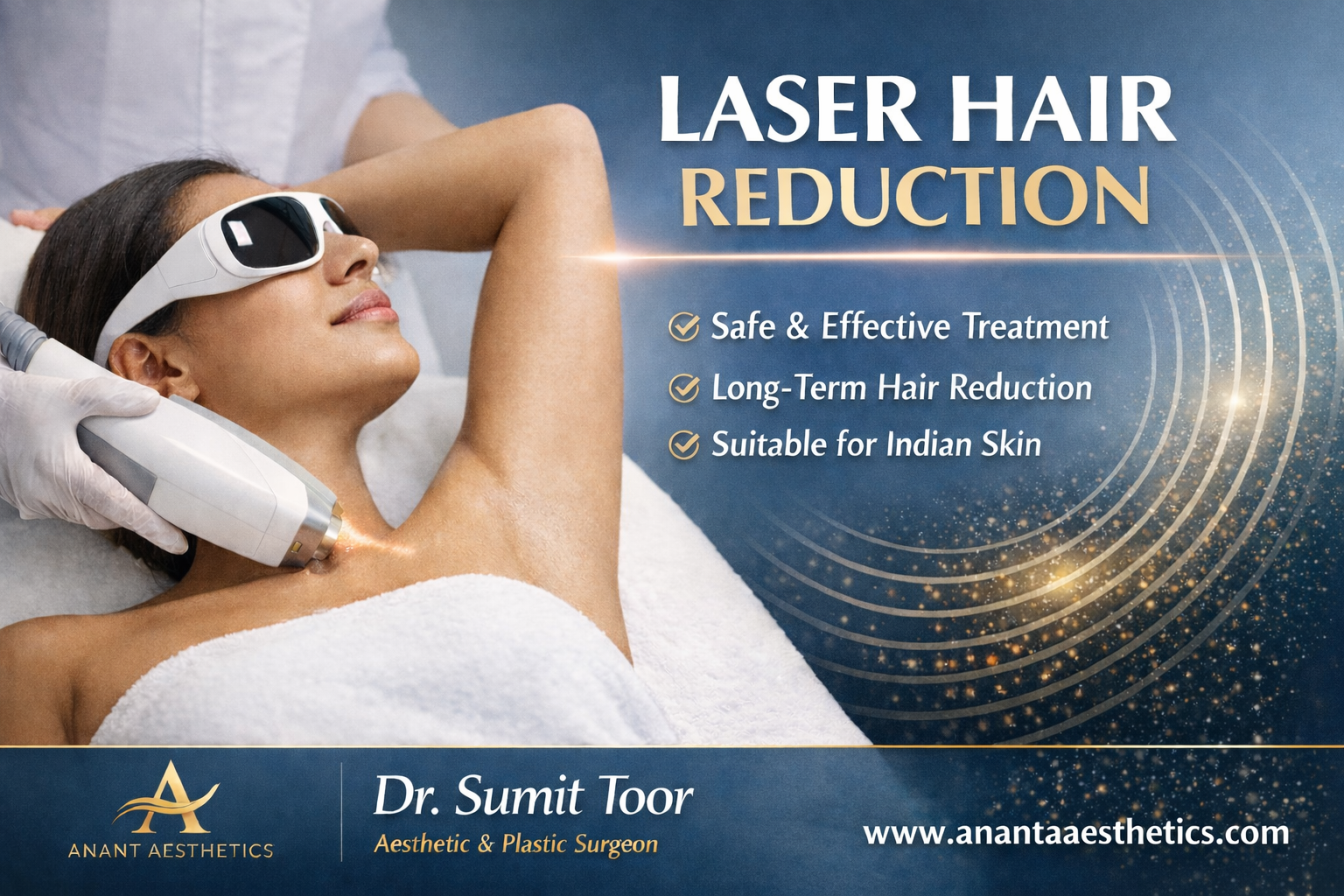
The Science of Selective Photothermolysis
The effectiveness of laser hair reduction is rooted in the principle of selective photothermolysis. This process involves using specific wavelengths of light to target the hair follicle without damaging the surrounding skin tissue. The process works in three key steps:
- Melanin as the Chromophore: The laser emits energy that is specifically absorbed by the melanin (pigment) located in the hair shaft.
- Heat Generation: Once absorbed, the light energy is converted into thermal energy (heat), which effectively disables the hair follicle’s ability to produce new hair.
- Selective Targeting: Because the laser is tuned to the pigment of the hair, the surrounding skin remains largely unaffected, ensuring a safe treatment profile.
Understanding the Hair Growth Cycle
A common question is why multiple sessions are necessary. The answer lies in the biology of hair growth. Laser treatments are most effective during the anagen phase, or the active growth phase. During this stage, the hair contains the maximum amount of melanin and is physically attached to the follicle, allowing the heat to travel directly to the root.
Since only a percentage of your hair is in the anagen phase at any given time, a series of treatments is required to ensure every follicle is treated during its growth cycle.
Modern Laser Technologies
Not all lasers are created equal. The choice of technology depends heavily on the patient’s skin type and hair texture:
- Diode Laser (810 nm): The gold standard for many, offering a perfect balance of safety and efficacy. It is highly effective for a wide range of skin types, including Indian skin.
- Alexandrite Laser (755 nm): Known for faster results, this laser is ideal for patients with lighter skin tones and provides high melanin absorption.
- Nd:YAG Laser (1064 nm): This is the safest option for darker skin tones (Fitzpatrick IV–VI). Its deeper penetration bypasses the surface melanin, significantly reducing the risk of pigmentation changes.
- IPL (Intense Pulsed Light): While often marketed alongside lasers, IPL is not a true laser. It uses broad-spectrum light and is generally less precise and less effective than dedicated laser systems.
Patient Selection and Safety Protocols
The ideal candidate for laser hair reduction typically has dark, coarse hair. However, modern advancements have made the procedure accessible to a broader range of skin types. A critical part of the process is Fitzpatrick Skin Typing, which helps specialists determine the safest laser settings to avoid complications.
Contraindications: Treatment should be avoided or postponed if there are active infections in the area, photosensitive disorders, or if the patient has a recent tan. While pregnancy is considered a relative contraindication, it is generally advised to wait until postpartum.
The Clinical Procedure: What to Expect
A professional clinical approach involves strict protocols to ensure patient comfort and safety:
- Pre-Procedure: Patients should avoid waxing or plucking for at least four weeks prior, as the follicle must be intact. Shaving the area 24 hours before the session is recommended.
- During the Session: Protective eyewear is mandatory for both the patient and the operator. The specialist adjusts parameters such as fluence (energy level) and pulse duration based on the target area.
- Pain Management: Most modern devices feature integrated cooling systems to soothe the skin. For sensitive areas, topical anesthetic creams may be applied.
Special Considerations for Indian Skin
Indian skin types (typically Fitzpatrick IV–V) require a specialized approach due to higher melanin content in the skin. To prevent burns or hyperpigmentation, aesthetic specialists often prefer the Nd:YAG laser or specific Diode settings. A conservative approach with gradual escalation of energy ensures the best results without compromising skin integrity.
Myths vs. Facts
- Myth: Laser provides 100% permanent hair removal.
Fact: It provides permanent hair reduction. While most hair is gone, some fine hair may remain or regrow over years. - Myth: It works in a single session.
Fact: It requires a series of 6–8 sessions for optimal results. - Myth: Home devices are just as good as clinical lasers.
Fact: Medical-grade lasers used in clinics are significantly more powerful, precise, and effective than at-home gadgets.
Results and Maintenance
Patients can expect to see visible thinning and a delay in regrowth after just 2 to 3 sessions. Once the initial course of 6 to 8 treatments is complete, most patients only require an annual or biannual touch-up session to maintain their smooth results.
Frequently Asked Questions
Is the procedure painful?
Most patients describe the sensation as a mild snapping or tingling, similar to a rubber band against the skin.
Can I shave between sessions?
Yes! In fact, shaving is the only recommended method of hair removal between sessions, as it keeps the hair root intact for the next laser treatment.
Is it safe for facial hair?
Absolutely. Laser hair reduction is very effective for facial hair, though it requires careful parameter selection to protect the delicate skin of the face.
Expert guidance provided by Dr. Sumit Toor, Aesthetic & Plastic Surgery. For more information, visit Anant Aesthetic Clinic.